

|
Study highlights potential to produce a value-added lithium chemical at site, offering further opportunities to reduce logistics intensity over time and aligning with Canada’s and Québec’s objectives for domestic processing of critical minerals
MONTREAL, June 15, 2026 /PRNewswire/ — June 15, 2026 – Sydney, Australia
Highlights
- Concept study completed evaluating future potential to process spodumene concentrate into a value-added lithium product, directly at the Shaakichiuwaanaan site.
- Following a structured review of seven processing flowsheet options to produce a “value added” lithium product, the study identified Primero’s (NRW Holdings (ASX: NWH) subsidiary “Primero”) proprietary ALi® atmospheric leach processas the preferred value-added pathway for further study, given:
- its overall economic potential, strong logistics efficiency benefits and technical risk profile, and
- its alignment with the Company’s sustainability objectives through practicing environmental care in processing and minimizing the Project’s environmental footprint.
- Bench scale testwork on Shaakichiuwaanaan spodumene concentrate samples has been undertaken by Primero in Perth – Western Australia using the ALi® process, producing a 99.8% Li₂CO₃ battery-grade lithium carbonate.
- If combined with the use of electric calcination through Québec’s low-cost renewable energy, on-site value-added processing has future potential to reduce carbon intensity and improve efficiencies within the battery materials supply chain.
- Supports the Québec and Canada’s objectives for domestic, value-added processing, consistent with their respective Critical Minerals Strategies.
- The On-Site Refining Strategy is a staged, longer term, growth opportunity and is not required for the current proposed development of the base spodumene concentrate project outlined in the 2025 Feasibility Study.
- Next steps – future work expected to determine how to capture further economic benefits of value-added products at site including potential introduction of electrical calcination technology to leverage the full potential of Québec’s renewable and low-cost hydroelectric power.
Frederic Mercier-Langevin, Chief Operations/Development Officer for the Company comments: “Shaakichiuwaanaan is already a Tier-1 asset under our 2025 Feasibility Study, and this concept study potentially identifies a credible pathway to capture additional value on top of it. Converting spodumene concentrate to a “value added” and potentially battery-grade lithium chemical on-site could deliver a lower-cost, lower-carbon flowsheet powered by Québec hydroelectricity.
“Bench scale results on Shaakichiuwaanaan concentrates indicate battery-grade purity is potentially achievable and the logistics savings could be material. Importantly, subject to further test work and demonstration at scale being undertaken, this could be a staged value-add opportunity for Shaakichiuwaanaan for future development beyond the base spodumene project. Further study work now underway will continue to test and determine the path forward,” added Mr. Mercier-Langevin.
Ken Brinsden, President, CEO & Managing Director comments: “For decades the industry has mined hard-rock lithium in one place and refined it in another, often overseas, which is hardly the most efficient supply chain solution. The work we’re reporting today points to the potential for a redefinition of the supply chain. It could be a credible alternate pathway, demonstrated at bench scale with our spodumene concentrates, to refine battery-grade lithium at the mine gate in a stable Western, low-carbon supply chain. This is the kind of industry step-change, supported by Shaakichiuwaanaan’s premier geology, that drew me to this Project.”
PMET Resources Inc. (the “Company” or “PMET”) (TSX: PMET) (ASX: PMT) (OTCQX: PMETF) (FSE: R9GA) is pleased to report on initiatives to develop value-added lithium chemical products at its 100%-owned Shaakichiuwaanaan Project (the “Project”), located in the Eeyou Istchee James Bay region of Quebec, Canada.
The Project’s 2025 Feasibility Study base case has already demonstrated the resource scale and grade that contributes to the low-cost of a spodumene concentrate produced at Shaakichiuwaanaan.1 The Project also benefits from being adjacent to some of the lowest-cost renewable hydroelectric power in North America. With these strategic advantages as a backdrop, the Company is progressing the Project’s further assessment and development progress of its CV5 lithium-only project, with final mine authorization and extensive community consultation processes underway.
As part of its stated growth and diversification strategy to further add value to the Project, the Company has now completed a Concept Study assessing the potential to process spodumene concentrate into higher-value lithium chemical products directly at site. The work forms part of the Company’s broader long-term growth strategy to capture the potential additional value within the lithium supply chain while establishing a lower-carbon, Western-facing lithium chemicals platform in Québec. The Concept Study is based on low-level economic and technical assessments that are not sufficient to support the Company publishing production targets and economic outcomes or to provide assurance of an economic development case. The Concept Study does not constitute a preliminary economic assessment, pre-feasibility study, or feasibility study as defined under NI 43-101. Given the uncertainties involved, investors should not make any investment decision based solely on the results of the Concept Study.
A Potential redefinition of the North American Lithium Chemicals Supply
The Company believes the Shaakichiuwaanaan Project has the potential over its life to support an improved and more efficient lithium chemicals supply chain model, leveraging Québec’s abundant low-cost renewable hydroelectric power, strategic location within North America and proximity to key European and North American markets. Spodumene concentrate produced at Shaakichiuwaanaan is expected to be a raw material feed for a high-value chemical industry that is, to this day, largely conducted outside of Canada.
Producing a more concentrated, value-added lithia product on site is expected to provide the following benefits:
– Redefine the lithium value chain model by locating electric calcination and some or all of the chemical conversion at the mine site, capturing significant logistical benefits by materially reducing shipped volumes and costs through the production of a concentrated higher lithia content product;
– Leverage Québec’s renewable and low-cost hydroelectric power to support a lower-carbon lithium chemical supply chain, with the potential to enhance sustainability and materially reduce logistics-related emissions and fossil-fuel dependence;
– Creation of a western-facing lithium chemical supply chain, supporting western mineral sovereignty and re-shoring value traditionally retained by downstream spodumene converters outside of Québec and Canada; and
– Enhance Project value through the transformation of spodumene into a higher lithia content product that has the potential to command higher values and potentially broadening the Project’s customer-base.
Selecting the Process: Seven Options, One Preferred Pathway
The Company engaged Primero Group to complete a Concept Study to evaluate potential value-added processing routes for the spodumene concentrate produced at the Shaakichiuwaanaan Project. The primary objectives of the Study were to:
- Reduce the logistics associated with transporting 5.5% Li2O Spodumene Concentrate (SC5.5) over long distances (844 km trucking to Matagami with subsequent 1,075 km rail route to shipping port);
- Evaluate whether producing an industrial or battery grade lithium chemical could improve market flexibility and project value; and
- Identify the most technically and economically robust processing route to progress into future study stages.
Phase 1 of the Study provided a concept level assessment of seven alternative flowsheets for chemical processing options, with the goal of narrowing down options to progress to a Phase 2 assessment, which focused on detailed refinement of product pathways. Within the Phase 2 assessment, both Acid Roast and Atmospheric Leach options were considered.
The Atmospheric Leach option (through Primero’s proprietary ALi® process) was found to deliver the strongest overall performance in the areas that most influence long-term Project value. At a conceptual level, it delivered the lowest comparable capital costs and operating costs, reagent and trucking burden, HSE and environmental risks and the shortest payback period with the highest overall potential financial return. Due to the preliminary nature of the Concept Study, Australian disclosure law prohibits the Company from presenting potential production and economic scenarios. Further detailed work is required before such information can be presented (see Next Steps – PEA Study below).
ALi® Process Description
The ALi® flowsheet recovers lithium from beta spodumene through an atmospheric (low-pressure, lower-temperature) leach, stepping through ion exchange, before producing lithium carbonate by precipitation. Unlike the conventional high-temperature sulfuric acid roast that dominates hard-rock lithium refining, the atmospheric leach route is designed to operate with lower energy intensity, lower reagent consumption and resulting in a cleaner residue stream. Locating it at the mine gate keeps conversion close to the orebody and to the Project’s anticipated low-cost renewable power, regionalising a step in the supply chain that is conventionally performed offshore.
ALi® is one of a new generation of ‘acid-free’ lithium conversion flowsheets that replaces the conventional high-temperature sulfuric-acid roast (being the long-standing conventional industry route), with alkaline chemistry. The approach is designed to reduce reagent intensity and concentrated-acid handling, lower the process waste burden, while producing a more benign, potentially reusable residue.
In developing the ALi® process, Primero has processed several tonnes of 3rd party spodumene concentrate at its Pilot scale facility, producing several hundred kilograms of battery grade lithium carbonate. The same facilities have processed a smaller scale spodumene concentrate sample from Shaakichiuwaanaan to produce battery grade product, further supporting the proof of concept being applied by PMET to its downstream processing initiative.
The same acid-free approach (albeit leaching at high-pressure) is used at Tesla’s lithium refinery in Texas, the highest-profile commercial-scale example to date. Tesla refines spodumene at the chemical conversion facility in Texas, rather than shipping concentrate offshore for conversion. ALi® would apply that same principle at the Shaakichiuwaanaan mine gate, while targeting battery-grade lithium carbonate.
ALi® Process – Phase Two Testwork
As part of Phase 2 of the Concept Study, a bench-scale test program was conducted on approximately 10kg of an alpha spodumene lithium concentrate by ALS Metallurgy (Balcatta, Western Australia). The lithium concentrate used was generated from the dense media separation of material sourced from Shaakichiuwaanaan via the ApplePick program2
The concentrate was calcined (laboratory) at 1,050°C for 30 minutes, resulting in the conversion of 98.8% of the spodumene from the alpha to the beta phase. After milling, 2.2kg of the milled calcine was used for lithium extraction test work, utilizing Primero’s proprietary ALi® refining process (Figure 1 and Figure 2). The process resulted in a laboratory lithium extraction of 93.6%, based on beta spodumene lithium, with overall process recovery of 92.5%, inclusive of calcination.
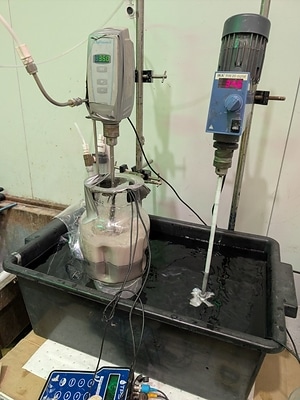
Figure 1: Bench-scale testwork in progress at ALS Metallurgy (Balcatta, Western Australia).
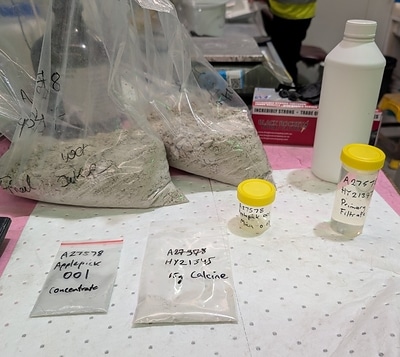
Figure 2: Applepick concentrate sample, processed at ALS Balcatta in Western Australia.
A high-grade lithium carbonate product, prepared by crystallization of carbonate leach solutions was analysed by Intertek (Perth, Western Australia). The purity was found to be 99.8% Li2CO3, and all contaminants of concern were found to be well within 2023 Chinese standards for lithium carbonate3 tolerances, thereby potentially making the product suitable for battery grade carbonate.
Transport Logistics
By introducing the chemical conversion at the mine site, the Concept Study naturally identified the opportunity to significantly reduce transport and logistics costs, given the total tonnage of material to transport (both reagents and product) would be substantially reduced, leading to a natural reduction of the number of trucks on the road on a daily basis.
Further details pertaining to the overall value-added products assessment process and outcomes can be found in Appendix 1.
Next Steps – PEA Study
Based on the results outlined above, production of lithium carbonate using Primero’s ALi® Atmospheric Leach process was found to have the potential to deliver the most favorable overall Project outcome both from an economic and sustainability perspective. It combines strong relative economics compared to other options with lower operational complexity and the greatest improvement in logistics (both quantity and nature of material to be hauled over considerable distances).
The potential to generate a battery-grade product, commanding higher product value and improved marketability, represents meaningful upside that warrants advancing this flowsheet further. While the more conventional Acid Roast option remains a technically feasible alternative, its higher costs and risk profile and comparatively less beneficial logistics make it less attractive as the primary development path for operation at site.
The testwork completed to date has significantly advanced this potential value-add opportunity for the Shaakichiuwaanaan Project – which is already demonstrated as a Tier-1 lithium asset through the 2025 Feasibility Study – providing a compelling reason to continue with the initiative to unlock this additional upside. The next phase of work will therefore focus on advancing the Ali® process towards a PEA level of detail, inclusive of the following:
- Additional testwork to support flowsheet design and environmental testwork for residue characterization;
- Flowsheet development, including option to produce battery-grade lithium carbonate;
- Detailed logistics study, with the intent of fully fleshing out synergistic opportunities between inbound reagents and outbound product transport;
- Determination of residue management and disposal requirements, including investigation of potential to offset cement costs in underground mine pastefill based on pozzolanic properties of ALi® residue streams;
- The inclusion of electric calcination equipment (kiln) is expected to harness Québec’s renewable, low-cost hydro-electric power, lowering operating costs and further reducing the Project’s carbon footprint – building on the initial emissions benefits delivered through reduced trucking and fossil-fuel dependence.
The next phase of work is expected to be completed over the next calendar year and will inform whether, when and how the value-added products opportunity could potentially be integrated into the broader Shaakichiuwaanaan development plan in the future. The initiative is being advanced as a staged value-add growth opportunity and is not required for the current proposed development of the base spodumene concentrate project contemplated in the 2025 Feasibility Study.
Provided this next stage of work continues to support the potential for the application of the ALi® process at Shaakichiuwaanaan, further development steps, such as the deployment of the process at pilot-scale, would likely be required.
Qualified/Competent Person
The technical and scientific information in this news release that relates to the Mineral Resource Estimate, and exploration results for the Company’s properties is based on, and fairly represents, information compiled by Mr. Darren L. Smith, M.Sc., P.Geo., who is a Qualified Person as defined by National Instrument 43-101 – Standards of Disclosure for Mineral Projects (“NI 43-101”), and member in good standing with the Ordre des Géologues du Québec (Geologist Permit number 01968), and with the Association of Professional Engineers and Geoscientists of Alberta (member number 87868). Mr. Smith has reviewed and approved the related technical information in this news release.
Mr. Smith is an Executive and Vice President of Exploration for PMET Resources Inc. and holds common shares, Restricted Share Units (RSUs), Performance Share Units (PSUs), and options in the Company.
The information in this news release that relates to the Mineral Reserve Estimate and Feasibility Study and the bench-scale testwork results is based on, and fairly represents, information compiled by Mr. Frédéric Mercier-Langevin, Ing. M.Sc., who is a Qualified Person as defined by NI 43-101, and member in good standing with the Ordre des Ingénieurs du Québec. Mr. Mercier-Langevin has reviewed and approved the related technical information in this news release.
Mr. Mercier-Langevin is the Chief Operating and Development Officer for PMET Resources Inc. and holds common shares, RSUs, PSUs, and options in the Company.
About PMET Resources Inc.
PMET Resources Inc. is a pegmatite critical mineral exploration and development company focused on advancing its district-scale 100%-owned Shaakichiuwaanaan Property located in the Eeyou Istchee James Bay region of Quebec, Canada, which is accessible year-round by all-season road and proximal to regional hydro-power infrastructure.
In late 2025, the Company announced a positive lithium-only Feasibility Study on the CV5 Pegmatite for the Shaakichiuwaanaan Property and declared a maiden Mineral Reserve of 84.3 Mt at 1.26% Li2O (Probable)4. The study outlines the potential for a competitive and globally significant high-grade lithium project targeting up to ~800 ktpa spodumene concentrate using a simple Dense Media Separation (“DMS”) only process flowsheet. Further, the results highlight Shaakichiuwaanaan as a potential North American critical mineral powerhouse with significant opportunity for tantalum and caesium in addition to lithium.
The Project hosts a Consolidated Mineral Resource5 totaling 108.0 Mt at 1.40% Li2O and 166 ppm Ta2O5 (Indicated) and 33.4 Mt at 1.33% Li2O and 155 ppm Ta2O5 (Inferred), and ranks as a top ten lithium pegmatite globally in size. Additionally, the Project hosts the world’s largest pollucite-hosted caesium pegmatite Mineral Resource at the Rigel and Vega zones with 0.69 Mt at 4.40% Cs2O (Indicated), and 1.70 Mt at 2.40% Cs2O (Inferred).
For further information, please contact us at [email protected] or by calling +1 (604) 279-8709, or visit www.pmet.ca. Please also refer to the Company’s continuous disclosure filings, available under its profile at www.sedarplus.ca and www.asx.com.au, for available exploration data.
This news release has been approved by
“KEN BRINSDEN”
Kenneth Brinsden, President, CEO, & Managing Director
Disclaimer for Forward-Looking Information
This news release contains “forward-looking statements” and “forward-looking information” within the meaning of applicable securities laws.
All statements, other than statements of present or historical facts, are forward-looking statements. Forward-looking statements involve known and unknown risks, uncertainties and assumptions and accordingly, actual results could differ materially from those expressed or implied in such statements. You are hence cautioned not to place undue reliance on forward-looking statements. Forward-looking statements are typically identified by words such as “plan”, “development”, “growth”, “continued”, “intentions”, “expectations”, “emerging”, “evolving”, “strategy”, “opportunities”, “anticipated”, “trends”, “potential”, “outlook”, “ability”, “additional”, “on track”, “prospects”, “viability”, “estimated”, “reaches”, “enhancing”, “strengthen”, “target”, “believes”, “next steps” or variations of such words and phrases or statements that certain actions, events or results “may”, “could”, “would”, “might” or “will” be taken, occur or be achieved.
Forward-looking statements include, but are not limited to, statements concerning the potential to process spodumene concentrate into higher-value lithium chemical products directly at site, including expected recoveries and product quality, the potential for transport and other logistics cost reductions where spodumene concentrate is processed directly at site, the preparation and release of a preliminary economic assessment (PEA) with respect to the processing of spodumene concentrate at site within the next calendar year, the matters that such PEA will consider and the timing thereof, the Company’s long-term growth strategy to capture additional value within the lithium supply chain while establishing a lower-carbon, Western-facing lithium chemicals platform in Québec, the selection, advancement and potential commercial application of ALi®’s process principles at the Shaakichiuwaanaan Property, the potential Project outcome both from an economic and sustainability perspective by producing lithium carbonate using Primero’s ALi® Atmospheric Leach process, the potential to generate a battery-grade product at scale with enhanced marketability and value, the potential of on-site value-added processing to reduce carbon intensity and improve efficiencies within the battery materials supply chain, the Company’s plans to advance further technical studies, testwork, pilot-scale activities and engineering work, the potential integration of value-added processing into the Project’s development plan, obtaining the required authorizations, approvals and permits for processing facilities, the preliminary nature of the Concept Study and its ability to support further technical and economic evaluation , and the preparation and release of an updated Feasibility Study in the second half of 2026.
Forward-looking statements are based upon certain assumptions and other important factors that, if untrue, could cause actual results to be materially different from future results expressed or implied by such statements. There can be no assurance that forward-looking statements will prove to be accurate. Key assumptions upon which the Company’s forward-looking information is based include, without limitation, the ability of the Company to leverage Québec’s renewable and low-cost hydroelectric power and other required infrastructure, the ability of the Company to successfully develop, scale, operate and implement ALi® and its Atmospheric Leach option at the Shaakichiuwaanaan Property and the technical, economic and commercial viability of such process, that the results of the Concept Study and other testwork may be indicative of potential future performance, the Company’s ability to achieve battery-grade carbonate, the ability to achieve anticipated reduction in transportation costs, the accuracy of reserve and resource estimates, the classification of resources and the assumptions on which the reserve and resource estimates are based, long-term demand and pricing for lithium (spodumene), tantalum (tantalite), and caesium (pollucite) supply, that exploration and development results continue to support management’s current plans for the Shaakichiuwaanaan Property development, the availability and cost of reagents, consumables and equipment, the Company’s ability to obtain required authorizations, approvals and permits for value-added processing, that the Concept Study results, which are preliminary in nature and not based on a PEA or feasibility study, will support further advancement of the project and the ability of the Company to complete the proposed PEA.
Forward-looking statements are also subject to risks and uncertainties facing the Company’s business, any of which could have a material adverse effect on the Company’s business, financial condition, results of operations and growth prospects. Readers should review the detailed risk discussion in the Company’s most recent Annual Information Form filed on SEDAR+, for a fuller understanding of the risks and uncertainties that affect the Company’s business and operations.
Although the Company believes its expectations are based upon reasonable assumptions and has attempted to identify important factors that could cause actual actions, events or results to differ materially from those described in forward-looking statements, there may be other factors that cause actions, events or results not to be as anticipated, estimated or intended. There can be no assurance that forward-looking information will prove to be accurate. If any of the risks or uncertainties mentioned above, which are not exhaustive, materialize, actual results may vary materially from those anticipated in the forward-looking statements.
The forward-looking statements contained herein are made only as of the date hereof. The Company disclaims any intention or obligation to update or revise any forward-looking statements, whether as a result of new information, future events or otherwise, except to the extent required by applicable law. The Company qualifies all of its forward-looking statements by these cautionary statements.
Competent Person Statement (ASX Listing Rules)
The information in this news release that relates to the Feasibility Study (“FS”) for the Shaakichiuwaanaan Project, which was first reported by the Company in a market announcement titled “PMET Resources Delivers Positive CV5 Lithium-Only Feasibility Study for its Large-Scale Shaakichiuwaanaan Project” dated October 20, 2025 (Montreal time) is available on the Company’s website at www.pmet.ca, on SEDAR+ at www.sedarplus.ca and on the ASX website at www.asx.com.au. The production target from the Feasibility Study referred to in this news release was reported by the Company in accordance with ASX Listing Rule 5.16 on the date of the original announcement. The Company confirms that, as of the date of this news release, all material assumptions and technical parameters underpinning the production target in the original announcement continue to apply and have not materially changed.
The Mineral Resource and Mineral Reserve Estimates in this release were first reported by the Company in accordance with ASX Listing Rules 5.8 and 5.9 in market announcements titled “World’s Largest Pollucite-Hosted Caesium Pegmatite Deposit” dated July 20, 2025 (Montreal time) and “PMET Resources Delivers Positive CV5 Lithium-Only Feasibility Study for its Large-Scale Shaakichiuwaanaan Project” dated October 20, 2025 (Montreal time) and are available on the Company’s website at www.pmet.ca, on SEDAR+ at www.sedarplus.ca and on the ASX website at www.asx.com.au. The Company confirms that, as of the date of this news release, it is not aware of any new information or data verified by the competent person that materially affects the information included in the relevant announcement and that all material assumptions and technical parameters underpinning the estimates in the relevant announcement continue to apply and have not materially changed. The Company confirms that, as at the date of this announcement, the form and context in which the competent person’s findings are presented have not been materially modified from the original market announcement.
Appendix 1 – JORC Code 2012 Table 1 (ASX Listing Rule 5.8.2)
Section 1 – Sampling Techniques and Data
|
Criteria |
JORC Code explanation |
Commentary |
|
Sampling techniques |
|
|
|
Drilling techniques |
|
|
|
Drill sample recovery |
|
|
|
Logging |
|
|
|
Sub-sampling techniques and sample preparation |
|
|
|
Quality of assay data and laboratory tests |
|
|
|
Verification of sampling and assaying |
|
|
|
Location of data points |
|
|
|
Data spacing and distribution |
|
|
|
Orientation of data in relation to geological structure |
|
|
|
Sample security |
|
|
|
Audits or reviews |
|
|
Section 2 – Reporting of Exploration Results
|
Criteria |
JORC Code explanation |
Commentary |
|
Mineral tenement and land tenure status |
|
|
|
Exploration done by other parties |
|
|
|
Geology |
|
|
|
Drill hole Information |
|
|
|
Data aggregation methods |
|
|
|
Relationship between mineralization widths and intercept lengths |
|
|
|
Diagrams |
|
|
|
Balanced reporting |
|
|
|
Other substantive exploration data |
|
|
|
Further work |
|
|
APPENDIX 1
Phase 1: Options Assessment
Seven flowsheet options were evaluated across three processing routes (Acid Roast, Pressure Leach and Atmospheric Leach) as well as three different products (lithium carbonate, lithium sulfate and lithium phosphate).
Phase 1 provided a concept level comparison of all process options, with the goal of narrowing down options to progress to a Phase 2, focused on detailed refinement of product pathways.
The seven (7) options were evaluated using a multi-factor analysis using a combination of qualitative and quantitative factors:
- CapEx;
- OpEx;
- Product and Reagents Logistics;
- Reagent Sourcing and Availability;
- Technology Maturity;
- Recovery Risk;
- Flowsheet complexity;
- Product marketing;
- Residue Handling;
- Labour Availability.
The major project drivers – such as CAPEX, OPEX, technology maturity, product and reagent logistics and reagent sourcing – were assigned heavier relative weighting to reflect their increased influence on project viability. The remaining categories were considered secondary categories and assessed using a lighter relative weighing. Quantitative metrics were scored proportionally based on relative performance across the options, while qualitative criteria were evaluated using engineering judgement informed by industry precedent and operational experience.
Phase 1 shortlisted two lithium carbonate pathways to be advanced to the next stage for more detailed analysis; the Atmospheric Leach process achieved the highest score, with the Acid Roast process coming in second place.
Phase II: Concept Study
The Phase 2 design basis built upon the Phase 1 assumptions while incorporating updated process parameters. While Phase 1 assigned 100% lithium recovery to all options for concept–level comparability and to isolate CAPEX/OPEX and logistics differences, Phase 2 introduced more realistic recovery assumptions, with a lower recovery applied to the Atmospheric Leach option to account for the novel technology. This assumption affects consumptions, product mass, and trucking requirements.
Phase II Outcomes
Due to the preliminary nature of the Concept Study, Australian disclosure law prohibits the Company from presenting potential production and economic scenarios. Further detailed work is required before such information can be presented (see Next Steps – PEA Study above).
The reagent quantities were estimated using the refined recoveries and material balances and the logistics were re-evaluated for Phase 2, calculating the inbound (reagents) and outbound (product) transportation requirements for both options for comparison against the outbound-only transportation requirements of the spodumene concentrate (base case).
The Study outlined that, beyond the expected reduction in transportation costs due to the inherent significant drop in volume from concentrate to carbonate, the two options could capture varying degrees of synergies between outbound trucks leaving site with product and returning to site with reagents, synergies that do not exist under the base case where spodumene concentrate trucks leave the mine site full and return empty.
Based on the above, the Study concluded that introducing value-added products at the mine site could significantly reduce transport and logistics costs, given the total tonnage of material to transport (both reagents and product) would be substantially reduced, leading to a natural reduction of the number of trucks on the road on a daily basis.
The Atmospheric Leach option was found to deliver the strongest overall performance in the areas that most influence long-term project value, delivering the lowest capital costs, operating costs, reagent and trucking burden, HSE and environmental risks and the shortest payback period with the highest potential financial return.
Although the Acid Roast option benefits from greater process maturity and existing industrial references, these advantages are outweighed by its higher reagent demand, increased logistics requirements, more complex residue management, and higher sensitivity to market and operating conditions.
|
1 |
See Feasibility Study news release dated October 20, 2025. |
|
2 |
See news release « PMET Produces High Recovery (89%) and High Grade Spodumene Concentrate (6.1% Li2O) from Innovative CV5 Sample and DMS Pilot Program » dated May 3, 2026. |
|
3 |
https://www.chinesestandard.net/PDF-EN/YST582-2023EN-P10P-H7920H-642640.pdf |
|
4 |
See Feasibility Study news release dated October 20, 2025. Probable Mineral Reserve cut-off grade is 0.40% Li2O (open-pit) and 0.70% Li2O (underground). Underground development and open-pit marginal tonnage containing material above 0.37% Li2O are also included in the statement. Effective Date of September 11, 2025. |
|
5 |
The Consolidated MRE (CV5 + CV13 pegmatites), which includes the Rigel and Vega caesium zones, totals 108.0 Mt at 1.40% Li2O, 0.11% Cs2O, 166 ppm Ta2O5, and 66 ppm Ga, Indicated, and 33.4 Mt at 1.33% Li2O, 0.21% Cs2O, 155 ppm Ta2O5, and 65 ppm Ga, Inferred, and is reported at a cut-off grade of 0.40% Li2O (open-pit), 0.60% Li2O (underground CV5), and 0.70% Li2O (underground CV13). A grade constraint of 0.50% Cs2O was used to model the Rigel and Vega caesium zones. The Effective Date is June 20, 2025 (through drill hole CV24-787). Mineral Resources are not Mineral Reserves as they do not have demonstrated economic viability. Mineral Resources are inclusive of Mineral Reserves. |
ข่าวที่เกี่ยวข้อง
- Amap and Sands China mark the delivery of the first Tutu robots, with expected indoor navigation and 3D resort previews
- Sungrow Powers WKV’s Largest Utility-Scale BESS in Sri Lanka
- Zoomlion Expands Mining Machinery Business as International Revenue Grows
- NOARK Combines Global Scale with Local Execution for Data Center Power Infrastructure
